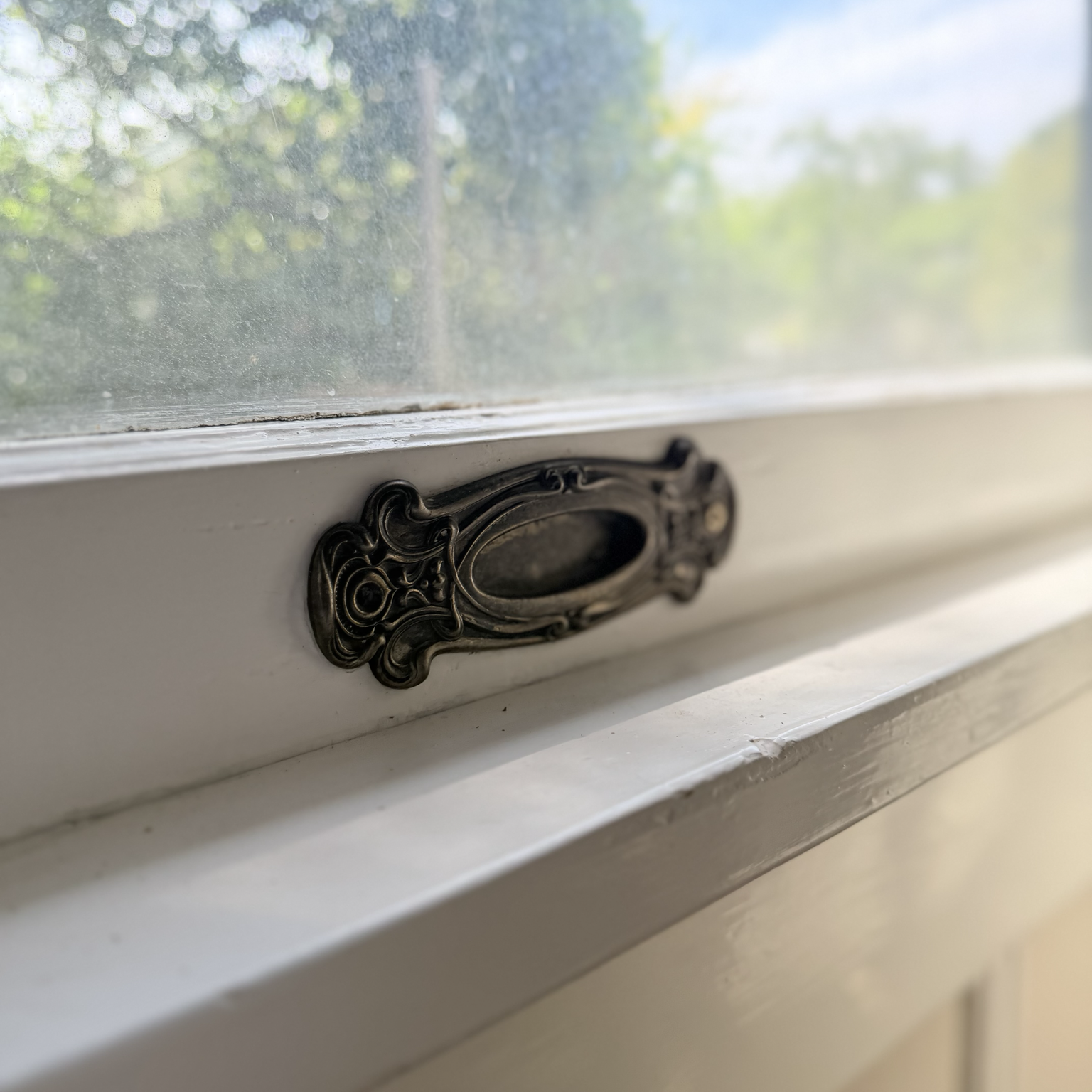

I set out to clean our old windows, and found myself admiring the hardware instead. That is how a simple chore tends to go around here.
Living in our 1915 Shreveport home, I’m learning how much there is to notice in the things we use every day. A little latch, the shape of the trim, the way the light falls through the glass: together, those details make these rooms feel like home.

Two of our upstairs bedrooms have beautiful wall-to-wall windows. Standing there with all that light coming in, I can see why I want to understand what we have before deciding to change it. Of course, admiring the windows does take a little longer than simply cleaning them.
What the Paint Layers Told Us

During the recent exterior freshening, our contractor began scraping away years and years of paint to prepare the house for its new coat. Underneath were different colors left behind by earlier chapters of the house.

We could see what appeared to be peach, green, beige, and white. We can’t yet say which color belonged to which period, but seeing those layers exposed felt a little like looking at a timeline painted directly onto the house.
What I’m Learning to Look For First
- Look at the whole window. Sash, trim, hardware, glass, sill, and frame can all provide clues about its age and construction.
- Don’t mistake age for failure. Sticking, old paint, worn hardware, or drafts don’t automatically mean the entire window needs replacing. Some problems may be repairable.
- Document before changing anything. Photographs of hardware, profiles, unusual glass, and construction details can become valuable records when researching a home’s architectural history.

There’s also something wonderfully ordinary about cleaning a window that generations of people may have stood beside before us. I wonder about the people who stood here before us. Were they waiting for someone to come home, watching a Louisiana storm roll in, or deciding the yard needed a little attention?

And now I’m here with glass cleaner in my hand, caring for the home Joey and I share. These everyday moments are some of my favorite parts of living here.
History isn’t always hidden in an archive. Sometimes it’s right in front of you, letting in the morning light.
Come Sit a While
What’s one original feature in an older home you would try hardest to save? Tell me in the comments.
If you enjoy old-house details and little glimpses of our life here, subscribe below to receive new stories from The House on Jefferson by email.

Leave a Reply